Reverse-Engineer Any YouTube Channel in 30 Minutes Using Claude AI (The Free Version)
I saw a video on YouTube the other day with 400,000 views. The guy was doing a “channel clone” tutorial. He spent 20 minutes walking through a $97 software, then at the end, dropped his affiliate link. The comments were full of people who bought it and got zero results. I almost fell for it myself.
Here’s what that video never told you.
The tool he was selling only scraped video titles and thumbnails. It didn’t reverse-engineer the actual engine that makes a channel work. And that’s where almost everyone gets stuck. They copy the surface stuff. The packaging. Not the system that builds the audience.
According to YouTube’s own data, over 500 hours of content are uploaded every minute. Most of it is noise. Yet a handful of channels dominate their niche year after year. They aren’t doing anything magical. They’re following a repeatable structure that you can extract, if you know what to look for.
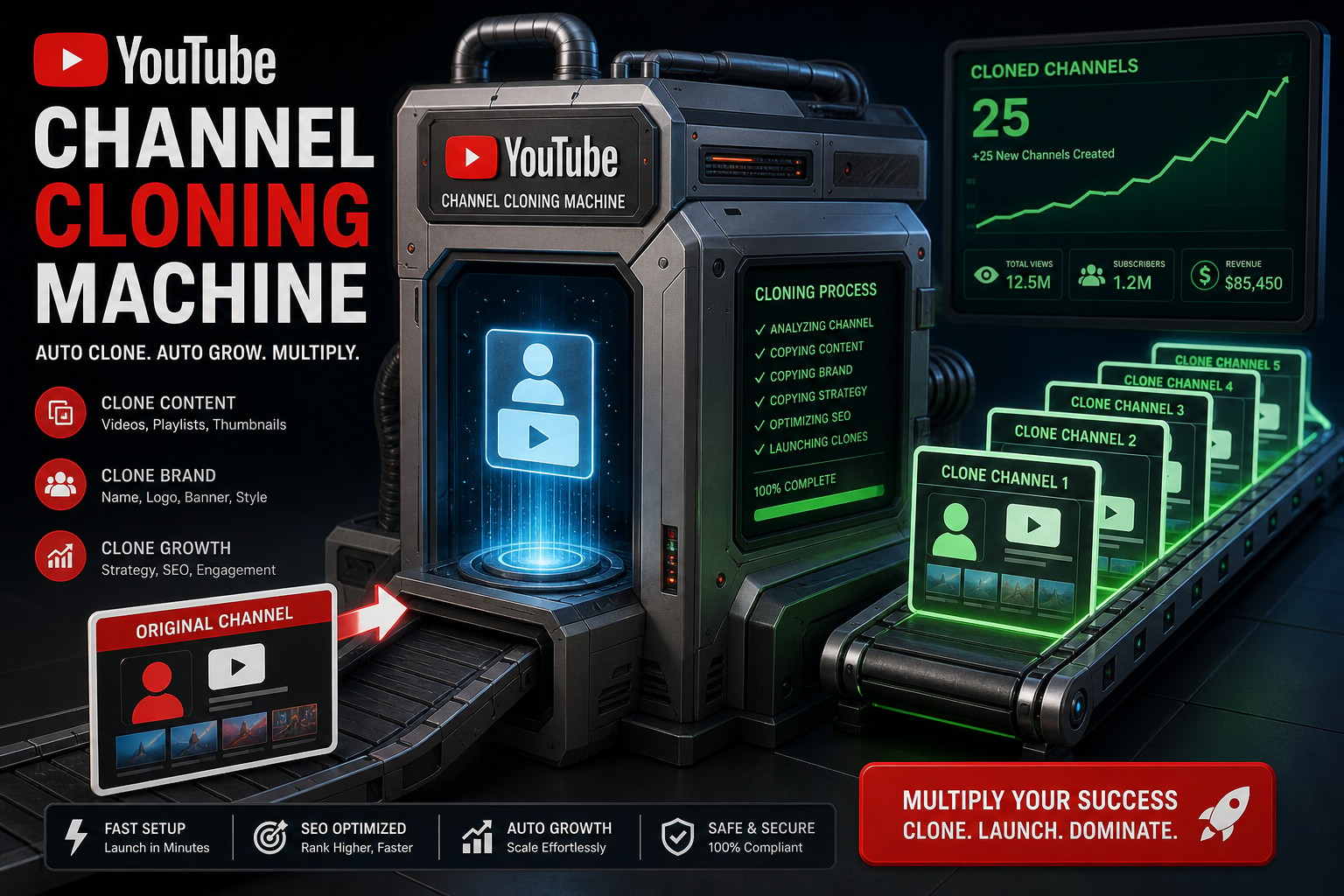
I figured out a way to do it with Claude AI. The free version. No credit card. No $97 software. And it’s not some hacky “scrape their tags” nonsense. It’s a full-channel cloning system that takes about 30 minutes once you run through it.
The Problem With Most Channel Cloning Advice
Walk into any Facebook group about YouTube growth and you’ll see the same bad advice. “Use VidIQ to see their keywords.” “Copy their description template.” “Post at the same time they do.”
None of that is wrong. But it’s like trying to bake the exact same cake by only looking at the frosting. You’re missing the recipe.
A YouTube channel is a content machine. It has a distinctive narrative voice, a recurring pattern of topic selection, a rhythm of hooks, a specific way it frames problems. That machine is the cloneable asset. The titles and thumbnails are just the output.
When I realized that, I stopped watching those clickbait videos and started feeding Claude AI the raw data from successful channels. Not just their video titles. Their full transcripts. Their community posts. Their comment replies. Patterns started jumping out at me within minutes.
What Claude AI Actually Sees
I gave Claude the last 30 videos from a channel with 600,000 subscribers in the productivity space. I asked it to map the narrative structure of every video: the hook, the problem statement, the mechanism, the resolution. Then I asked it to group them into content archetypes.
Claude identified five distinct video types that accounted for 92% of their views. Every single one followed a near-identical emotional arc. The host wasn’t just “making videos.” He was running a proven, repeatable framework for keeping attention.
Most YouTube channels aren’t creative projects. They’re formulaic attention machines wearing a human mask.
That sentence is worth reading twice. The second that clicked for me, I realized I could reverse-engineer any channel in any niche. And I could train Claude to write new scripts inside that exact formula, with my own unique angle.

The 30-Minute Cloning Workflow
I won’t give away the full prompt stack here (it’s six prompts, each doing one heavy lift). But here’s the outline so you see the logic.
First, you feed Claude a channel’s best-performing content as raw text. You’re looking for the intersection of high views and high engagement, not just viral one-offs. That gives you their core audience retention pattern.
Second, you ask Claude to extract the “narrative architecture.” Not the topics. The structure of how they open, where they insert tension, how they shift from problem to solution. Most people skip this step. It’s the one that makes all the difference.
Third, you map their audience’s identity. The language they use in comments. The pain points they repeat. Claude can cluster those into an avatar profile that’s scarier accurate than anything you’d pay a consultant five grand for.

Fourth, you generate three script templates in that channel’s exact style, but with your topic. Then you iterate. The first pass is never perfect, but the second one, with a little feedback, sounds like you’ve been running the channel for years.
Total time, from fresh account to finished script, was 27 minutes the first time I ran it. Now I can do it in 18.
Why This Feels Like Cheating (And Why It’s Not)
Some people get uncomfortable with the word “clone.” They think it means copying someone’s personality. It doesn’t. It means reverse-engineering the underlying systems that make their content stick.
Think of it like learning jazz. You transcribe the solos of the greats not to become a mimic, but to internalize their phrasing so deeply that it comes out as your own. That’s what this method does for video content. It gives you the phrasing of a successful channel, then you plug in your own voice, your own experiences, your own audience.

And because you’re using Claude AI’s free tier, you’re not risking anything except an hour of your time.
The people still paying $97 for scraping software are going to keep spinning their wheels because they’re cloning the wrong layer. They’re copying colors and sounds. You’ll be copying the engine.
That’s the real unlock.
If you want the exact prompt stack I used, every prompt word-for-word, I put it into a free resource you can grab below. No opt-in tricks. No upsell. Just the six prompts and a 12-minute walkthrough of where to paste them and what to tweak.
Read More ArticlesFree instant access — no credit card required